Materials, craft & reuse
From Bed Linens to Everyday Layers: Coyuchi’s Approach to Upcycled Cotton
A quilt’s worn softness, a sham’s pattern and the fine weave of a percale sheet can all carry on beyond the bed. When reclaimed cotton textiles are remade as clothing, their earlier lives remain part of the garment—visible in its fabric, its seams and the small differences that make each piece distinct.
Textiles rarely arrive at the end of their usefulness all at once. A sheet may thin at the center while its edges remain sound; a quilt may retain its warmth even after its surface has faded; a pillow sham may be out of step with a room’s changing decor but still hold strong cloth. Upcycling begins with this uneven reality. Rather than treating a used textile as a single, finished object, it asks whether some of its material can be carried forward into another form.
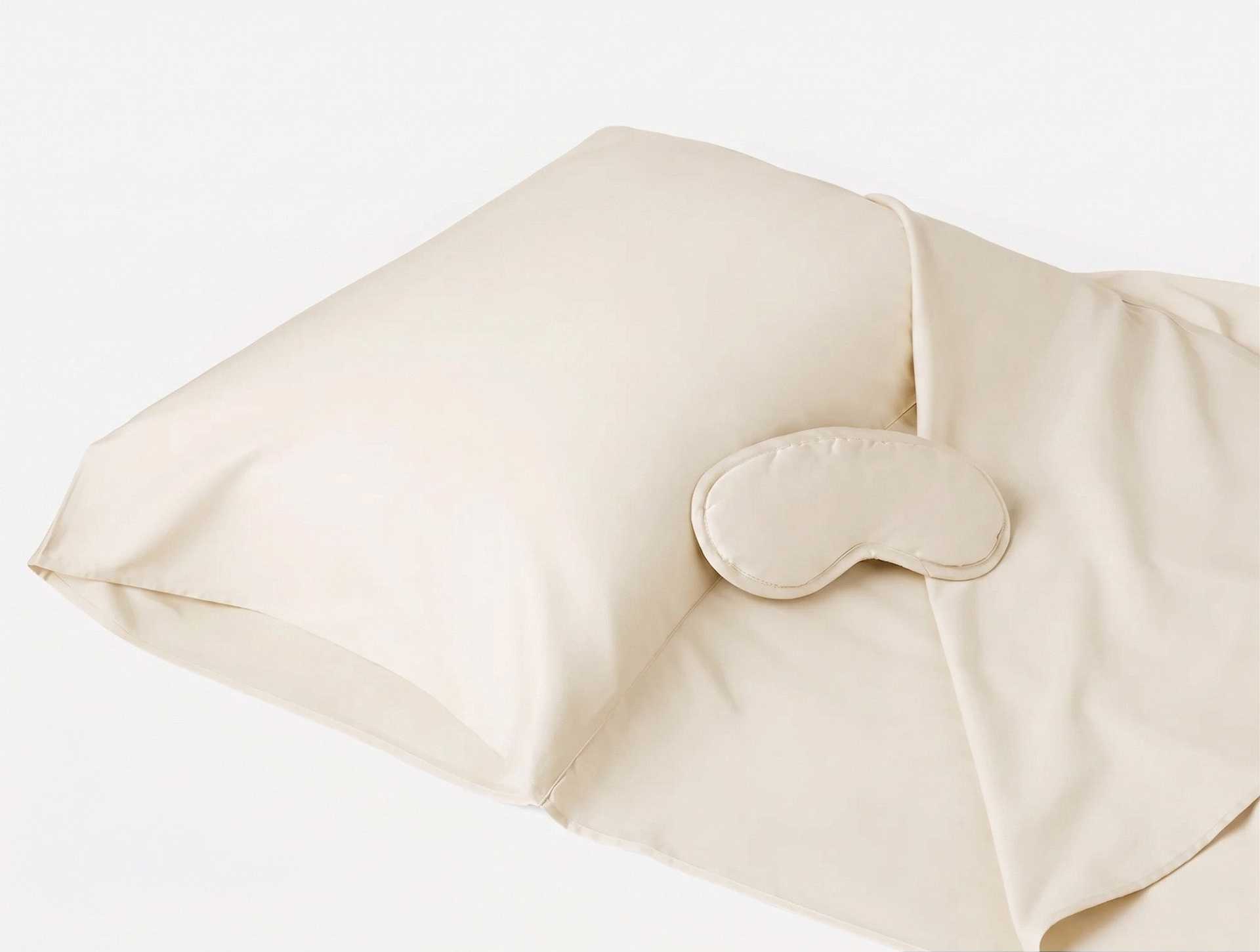
In Coyuchi’s clothing and accessories context, reclaimed quilts, shams and percale sheets have been used to make a cotton jacket. The transformation is both practical and expressive. Fabric that once belonged to a bed becomes an everyday layer, while the garment’s composition preserves traces of the textiles from which it was made. The result is not simply a new jacket made from cotton; it is a new arrangement of cloth with a history of use written into its surface.
This approach offers a useful way to think about textile reuse. Upcycling is not just a matter of changing a label or finding a new name for old fabric. It involves decisions about what can be salvaged, how pieces can be joined, what a garment needs to do, and how its maker can work with the limits and variations of the source material. Those decisions shape both the object and the story it can honestly tell.
What “upcycled cotton” means in practice
Cotton is a fiber; a quilt, sham or sheet is a textile product made from fibers through a sequence of spinning, weaving or knitting, finishing and construction. When a finished textile is reused to make a different object, the process begins with material that already exists. It does not begin by growing a new crop of cotton and manufacturing new cloth for that garment.
That distinction matters, but it is not a complete environmental accounting. Reuse may extend the service life of existing material and reduce the need to discard it immediately. Yet the precise impact depends on what happens at each stage: how the source textiles are collected and sorted, how much can be used, what additional materials are needed, and how the finished garment is cared for and eventually handled. Without a specific lifecycle assessment, it is better to describe the method clearly than to promise a precise environmental saving.
Upcycling also differs from recycling. Recycling typically breaks a material down so that it can be processed into fiber or another raw input. Upcycling makes use of the existing textile itself, often keeping its woven structure and surface intact. A piece of percale can remain percale; a quilt can retain its stitched layers. In this sense, the material’s former construction is not erased but adapted to a new purpose.
That adaptation has limits. Existing cloth may have worn spots, old seams, fading or marks from use. A maker must assess its condition and decide which areas are suitable for cutting and which should be left out. The available dimensions and shapes influence pattern choices. A jacket pattern designed around a continuous roll of new fabric may not be suitable for a collection of smaller, irregular pieces. Design must respond to the material rather than assume a blank, uniform surface.
The former life remains visible
Repurposed textiles can make a garment feel less like a standardized product and more like a record of material decisions. A jacket assembled from quilts, shams and percale sheets may combine fabrics with different patterns, weights or textures. These variations can be apparent in its panels and surface. The particular mix depends on the source materials used for that individual piece, which is why one garment may not be identical to another.
One-of-a-kind composition is not a decorative flourish added after construction. It follows directly from using textiles that already have their own dimensions, colors and histories. If source pieces differ, the pieces cut from them will differ too. A jacket’s pattern may therefore be shaped by the placement and scale of usable cloth, rather than by a plan to reproduce precisely the same arrangement over and over.
Such variation can be read as a kind of material honesty: the garment does not conceal that its cloth once served another role. Yet uniqueness should not be confused with perfection. Reuse can preserve irregularity, and a handmade object may show differences in pattern or composition. These are meaningful characteristics, but they do not replace ordinary questions about fit, finish, durability and care. A thoughtful evaluation considers both the story of the material and the quality of the garment made from it.
The history is also modest and specific. A quilt has been a quilt; a sheet has been a sheet. Unless a maker documents more, it is not possible to know who used those items, where they were used or how long they were kept. The most responsible account focuses on what is known: the source textile types, the materials identified for the garment, and the construction details described by its maker. That kind of restraint gives the object a credible story without inventing one.
From bedding to a wearable form
Turning household textiles into clothing requires more than cutting and stitching. A jacket needs to move with the wearer, tolerate repeated handling and hold its shape. Its collar, sleeves, pockets, closures and seams each have a job. When cloth comes from pre-existing bedding, the maker must consider how its weight and structure behave in those different parts of the garment.
A quilted textile, for example, is not simply a flat piece of cotton. Its layers and stitching contribute to its thickness and texture. A percale sheet has a different construction and a different hand. A sham may bring another surface or scale of pattern into the mix. The jacket’s design must accommodate these differences, including where thicker or more structured sections can be placed and how the seams can be finished cleanly.
Pattern layout becomes a form of problem-solving. The maker has to identify sound areas, work around worn sections and arrange the available cloth so that the garment can be assembled. This can influence the position of seams and the visual balance of the finished piece. It may also help explain why the finished composition varies from one jacket to another: the source material, not a uniform bolt, sets the boundaries.
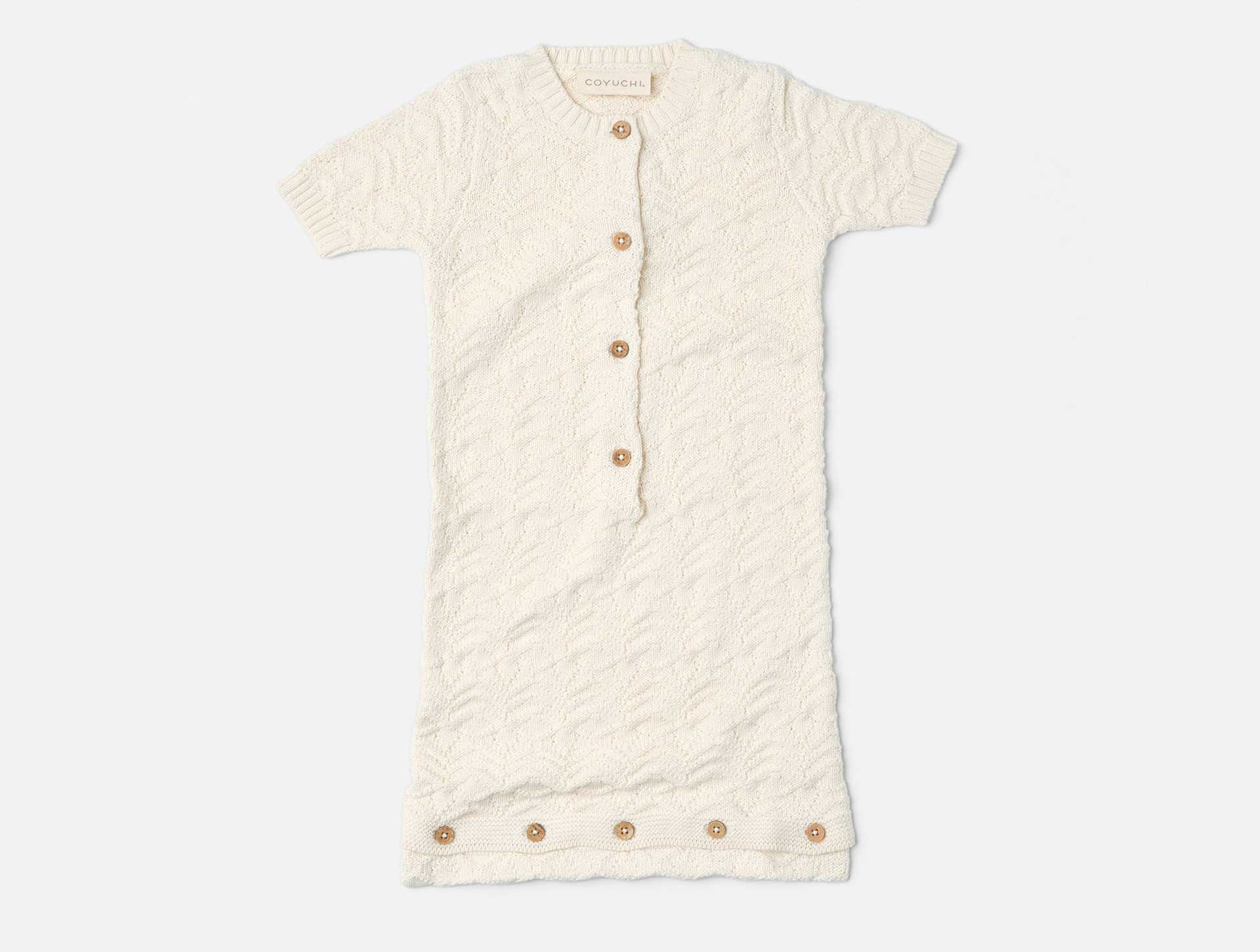
The design described for Coyuchi’s upcycled cotton jacket brings these considerations into an everyday silhouette. It has a relaxed fit, a Peter Pan collar, two side pockets and snap-button closures at the front. The shell and lining use repurposed organic cotton textiles, with quilts and shams forming the shell and percale sheets used for the lining. Handmade construction and differences in pattern and composition are part of the piece’s character.
Each of those details makes the garment more legible as clothing rather than merely reclaimed fabric. A relaxed shape can allow ease of movement and room for layers. Pockets add a familiar practical function. Snaps offer a simple means of fastening. The collar gives the jacket a distinct outline. The material reuse is central, but the garment still has to work as a garment: it should be comfortable to wear, understandable to care for and suited to the person’s needs.
Handmade does not mean identical
Handmade construction is often associated with skill and attention, but the term alone does not explain how an item is made or how it will perform. In an upcycled garment, handwork also meets the particular challenges of variable source cloth. The maker has to bring pieces of material together while respecting their thickness, pattern and condition. The resulting differences are a natural consequence of working with reclaimed textiles rather than an assurance that every detail will be the same.
That variability affects how a potential wearer might assess the jacket. It is worth looking at the overall fit and the placement of seams, as well as the feel and weight of its panels. The pattern and composition can vary, so a description of the general design may not fully predict the exact arrangement on any individual piece. A clear product description should set expectations about that variation and identify the materials and care guidance available.
There is a broader design lesson here. Standardization can make objects easier to reproduce, compare and replace. Reuse, by contrast, often brings the maker into closer contact with the material’s particular qualities. The design process becomes less about imposing an identical outcome and more about finding a useful form for what is already at hand. This does not make every irregularity valuable, but it does make material selection and construction central to the result.
Caring for repurposed cotton
A garment made from cotton textiles needs care suited to its construction, not just to the fiber named on its label. A quilted shell and a lighter woven lining may respond differently to washing, heat and agitation. Seams, snaps and layered sections also matter. Following the care instructions provided for the specific garment is the safest starting point, particularly when the fabric has been assembled from materials with different weights or finishes.
For cotton clothing without a more specific instruction, gentle habits can help reduce unnecessary wear. Washing only when needed, using a gentle cycle and avoiding excessive heat are sensible ways to limit stress on fabric and seams. Promptly removing a garment from the dryer can help prevent it from sitting in a compressed, wrinkled state. If the maker gives different instructions, those should take priority; reclaimed textiles can have characteristics that make general rules insufficient.
Before washing, check closures and pockets, and consider whether a stain can be treated locally instead of laundering the entire garment. If the piece has noticeable differences in thickness, color or construction, avoid aggressive scrubbing that could affect one area more than another. A garment made from previously used cloth deserves the same attentive care as any other well-made clothing—and careful maintenance can help keep it in use longer.
Repair is another part of a longer life. A loose button, an opening seam or a small tear may be addressed before it grows. The right repair depends on the location, fabric and construction; a simple fix can sometimes preserve the garment, while a complex or high-stress area may call for professional alteration. Reuse does not end when a textile becomes a jacket. Continued wear and repair determine how much further service the new object provides.
A more thoughtful measure of sustainability
Words such as “organic,” “reclaimed” and “upcycled” describe different aspects of a textile story. Organic refers to how agricultural fibers are produced under a defined standard; upcycled describes the use of an existing material in a new product. A garment can involve organic cotton and also reuse textiles made from it, but those terms should not be treated as interchangeable or as a complete measure of environmental performance.
The jacket’s described source materials are repurposed organic cotton quilts, shams and percale sheets. That information identifies the fiber history as presented and the reuse strategy. It does not, by itself, establish how much material was diverted from disposal, how long the jacket will last, or the total environmental effects of its manufacture, transport and care. Those questions require additional information. Clear language makes it possible to appreciate the reuse without turning it into an unsupported claim.
For readers comparing clothing, useful questions include: Which textiles were reused? Which parts of the garment are made from them? Are any other materials or components included? How is the garment constructed? What care instructions are recommended? Is variation between pieces expected? These questions shift attention from broad slogans to the material and workmanship that can actually be described.
There is also a human scale to the idea of reuse. A household textile may be familiar because it has served an everyday purpose: covering a bed, providing warmth, or adding a layer of softness to a room. In a jacket, that material enters public life again. It moves through errands, walks and ordinary routines. The change in function is striking precisely because the source object is so commonplace.
Why an everyday layer matters
Upcycling is often discussed through the dramatic transformation: one object becomes another, and waste appears to turn into possibility. The more durable insight may be quieter. Materials are not exhausted simply because their first purpose has ended. Some retain enough strength and character to serve again, if a maker can find a suitable form and a user is willing to care for it.
A jacket made from quilts, shams and percale sheets makes that idea tangible. The garment joins textile reuse to construction choices: a shell assembled from repurposed cloth, a lining drawn from another bedding material, and details designed for everyday wear. Its distinct composition follows from the source fabrics. Rather than hiding those origins, the design lets variation remain part of the finished object.
This is not a claim that reuse solves the larger challenges of textile production. Nor does it mean that every used textile can or should become clothing. Fabric condition, construction, safety, fit and care all matter. But an approach that begins with existing material asks a valuable question before new cloth is made: can something already in circulation meet a need again?
In that question, the path from bed linen to everyday layer becomes more than a change of category. It is a small study in how design can respond to what already exists. The cotton’s former use remains present, not as a hidden footnote but as part of the garment’s visible character. Each piece carries a different arrangement of source textiles, and with it, a reminder that the life of a material can be longer than the first object built around it.
Key points to keep in mind
- Upcycling reuses existing textile material in a new form; it is distinct from breaking fabric down into fiber for recycling.
- Coyuchi’s described jacket uses repurposed quilts and shams for the shell and percale sheets for the lining.
- Differences in source fabrics can make the pattern and composition of each handmade piece distinct.
- Care should follow the garment’s specific instructions, since layered and varied textiles may need attention beyond general cotton guidance.
- Material reuse is meaningful, but environmental claims should remain proportionate to the information available.